Generative artificial intelligence allows us to write articles, emails, and reports faster than ever before. However, this sudden explosion of machine-generated text creates a new problem. Readers, teachers, and clients want to know if a human or a computer wrote the text they are reading. If you publish or evaluate written material, you need a reliable way to verify its origin. An AI Score Checker provides the exact insights you need to make informed decisions about content authenticity.
Using a detection tool removes the guesswork from evaluating text. This guide explores what an AI Score Checker is and explains the technology that drives it. We will uncover why this software is vital for various industries, outline the biggest advantages, and debunk common myths. Finally, we will share practical tips so you can use these tools to protect your credibility and improve your editing workflow.
What Is an AI Score Checker and How Does It Work?
An AI Score Checker is a specialized software tool designed to analyze written content and determine the likelihood that artificial intelligence generated it. When you paste text into the platform, it acts as a digital forensic investigator. The tool does not search the internet for copied text like a plagiarism scanner does. Instead, it looks for specific linguistic patterns.
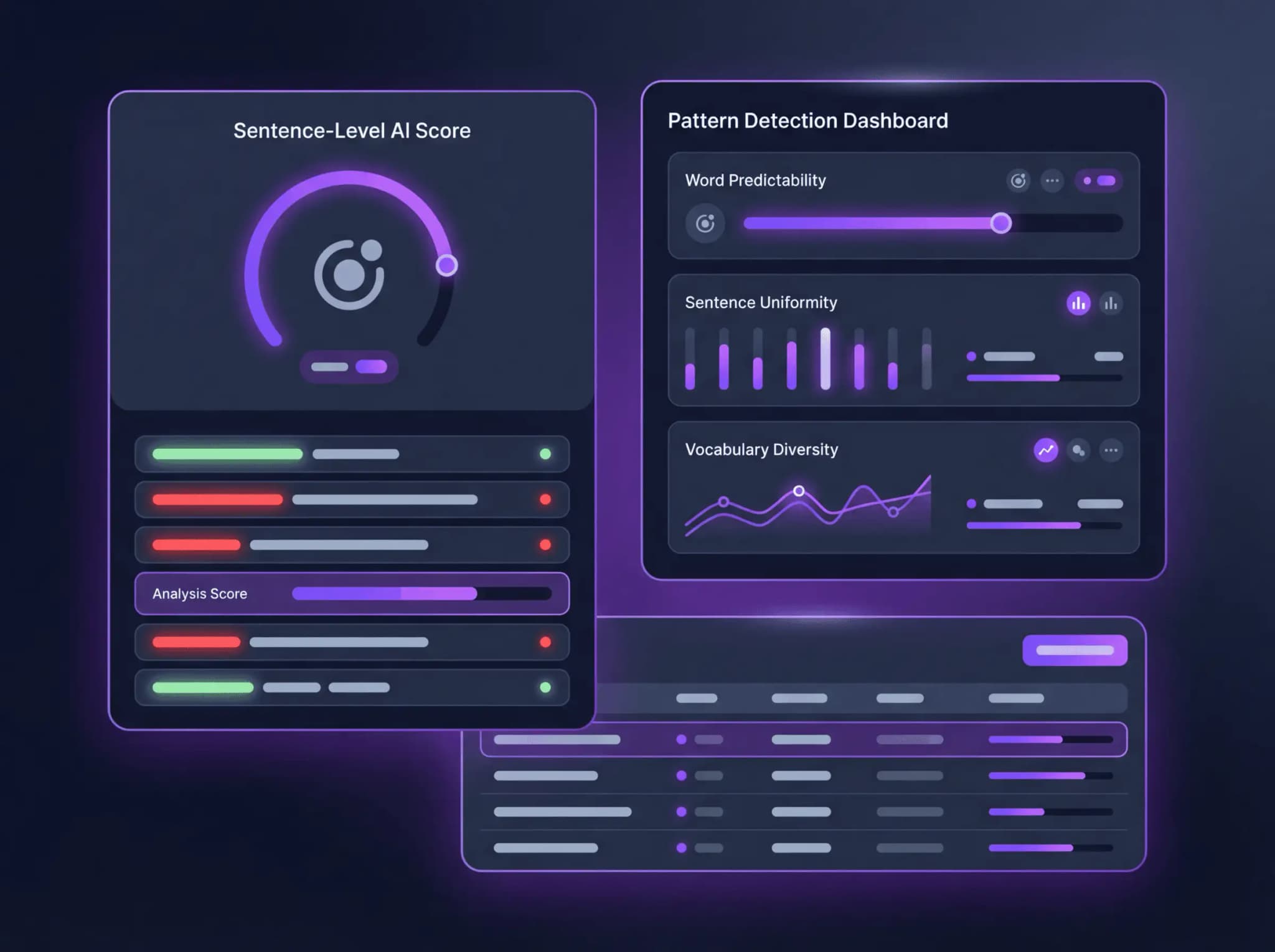
Machine learning models produce text in a very predictable way. An AI Score Checker evaluates two main factors to spot these computer-generated patterns: perplexity and burstiness.
Perplexity measures how predictable the words are. AI writing models choose the most logical next word based on their training data. This results in low perplexity. Human writers often use surprising word choices or unconventional sentence structures, resulting in high perplexity.
Burstiness measures the variation in sentence length and structure. Humans naturally mix short, punchy sentences with long, complex ones. AI tends to write sentences that look and feel very uniform. The checker evaluates these metrics and assigns a final percentage or score. This number tells you how much of the text exhibits traits typical of machine generation.
Why an AI Score Checker Matters
Different professionals face unique challenges as synthetic writing becomes more common. Using an AI Score Checker provides targeted solutions that meet these specific industry demands.
Empowering Businesses
Companies build their brands on trust and thought leadership. When customers read a company blog or white paper, they expect genuine human expertise. Publishing heavily automated content can damage brand reputation and harm search engine rankings. Businesses use an AI Score Checker to review freelance submissions and marketing copy before publication. This ensures their messaging remains authentic, engaging, and aligned with their core values.
Supporting Educators
Schools and universities focus on developing students’ critical thinking and communication skills. When students use chatbots to write their essays, they bypass the learning process. An AI Score Checker acts as an essential assistant for educators. It allows teachers to evaluate assignments quickly and flag suspicious papers. Instead of punishing students immediately, teachers use these insights to start meaningful conversations about academic integrity and proper tool usage.
Assisting Content Creators
Writers, editors, and publishers need to defend the value of their original work. When you submit a manuscript or article, you want your client to know you put genuine effort into the piece. Content creators run their own drafts through an AI Score Checker before hitting send. This proactive step helps them identify sentences that might sound too robotic. They can then revise the text to inject more personality, ensuring their final product sounds unmistakably human.
Key Benefits of Using an AI Score Checker
Integrating an AI detection tool into your daily workflow offers several powerful advantages. These benefits directly improve how you manage and evaluate written material.
First, you gain immediate clarity. Staring at a document and guessing if a human wrote it wastes valuable time. An AI Score Checker automates the analysis, providing actionable data in seconds.
Second, you protect your professional reputation. Publishing unedited, machine-generated text often results in bland, inaccurate content. By checking the score beforehand, you catch robotic phrasing early. You can then edit the material to guarantee it provides real value to your audience.
Finally, these tools help you maintain a consistent brand voice. Even if you use artificial intelligence to draft an outline, you must inject human emotion into the final piece. The checker highlights sections that lack variety, guiding you to rewrite those paragraphs with more creativity and flair.
Common Misconceptions About AI Score Checkers
Misunderstanding how detection software works leads to frustration and false accusations. Clearing up these myths allows you to approach the tool with realistic expectations.
Many people believe that an AI Score Checker is completely foolproof. In reality, no detection tool offers 100 percent accuracy. The software provides a statistical probability, not an absolute guarantee. Sometimes, highly structured human writing—like technical manuals or legal contracts—gets flagged as synthetic because it naturally features low burstiness and predictable phrasing.
Another popular myth assumes a high AI score means the writer cheated. This is entirely false. Writers frequently use grammar assistants, spelling checkers, and translation tools to polish their work. These legitimate editing programs can alter the text enough to trigger a high AI score. You must always interpret the results within the context of the assignment or project.
Some users also think you only need to run the checker once. Because language models update and evolve rapidly, the detection algorithms also change. A text that scores zero percent today might return a different result next year as the software improves its pattern recognition capabilities.
Tips for Effectively Using an AI Score Checker
To get the most value from your detection software, you need a smart, balanced approach. Follow these simple guidelines to make better decisions based on the scores you receive.
Review the Context Manually
Never use the score as the sole reason to reject a document. Read the text yourself. Look for factual errors, lack of emotion, or repetitive phrasing. Use the checker’s score to confirm your human intuition, not replace it. If the text provides excellent value and sounds engaging, a slightly elevated score might not matter.
Test Multiple Tools
Different checkers use different algorithms to evaluate text. If you receive a surprisingly high score on a crucial document, do not panic immediately. Run the same text through a second AI Score Checker. Comparing results from multiple platforms gives you a more accurate baseline and reduces the risk of false positives.
Use the Score as a Baseline for Editing
If you are a writer, use the tool to improve your craft. When the checker flags a paragraph, treat it as constructive feedback. Break up long, monotonous sentences. Swap out generic words for highly specific verbs. By actively lowering your AI score, you naturally make your writing more dynamic and interesting to read.
Start Verifying Your Content Today
Navigating the modern writing landscape requires the right tools. Guessing whether a document is authentic leaves you vulnerable to publishing low-quality content or making unfair accusations.
Take control of your content quality and defend your credibility. Start leveraging an AI Score Checker to analyze your documents, evaluate submissions, and refine your writing style. Add this powerful software to your editorial process, and enjoy the confidence that comes with making accurate, data-driven decisions about the text you publish and consume.